Brief № 047 · Strategy
Agricultural AI: who should EU SMEs choose for a field trial?
The EU's first Apply AI agriculture dialogue is a prompt to buy one useful data path, not a generic farm-AI promise.
On this page
Europe’s first Apply AI dialogue for agriculture has the right starting point for a small farm or food business: do not begin with a generic promise to “use AI”. Begin with one decision that is currently late, repetitive or badly evidenced.
The Commission’s 3 July report brought 180 experts together around agricultural AI. It identifies trustworthy, secure and easy-to-use applications as conditions for wider uptake, and says publicly supported work should pay particular attention to smaller farms, investment risk and digital skills. That is a buying brief, not a product category.
The first question is therefore not which model to use. It is which operational record the business is missing.
| First call | Best fit | What the SME should expect |
|---|---|---|
| xFarm Technologies | The farm needs one record of fields, activities, costs, documents and connected data | Farm-management software that brings field and business records together |
| AGRIVI | A grower, agribusiness or food operator needs crop operations and traceability organised | Farm and agrifood management software with operational and economic views |
| Sencrop | The decision depends on local weather at the plot | Connected weather stations, forecasts and crop-oriented alerts |
| CLAAS connect | Machinery, fleet work and field tasks are the primary operational record | Machine, farm and field-management tools connected to the CLAAS estate |
| ARCKONE | The useful farm record already exists but must join internal documents, approvals or office workflows | A bounded data and automation workflow with checks, handover and a named owner |
Source: European Commission and public materials from xFarm Technologies, AGRIVI, Sencrop, CLAAS and ARCKONE. Last verified 2026-07-11.
Start with the record that already decides work
xFarm describes a farm-management layer that can bring together multiple farms, while its wider product material covers field data, weather, inputs, costs and documents. That makes it the sensible first call when the immediate problem is keeping the farm’s own operational record coherent.
AGRIVI sits nearby but is particularly relevant where crop operations, economic performance and traceability need to be visible across an agrifood business. Its public product material frames the service around field insight and complex farm operations rather than a stand-alone AI assistant.
Neither choice needs a speculative AI programme to be useful. If a farm cannot say which field was treated, which input was used or who owns the next task, a clearer record is the higher-value purchase.
Buy local weather when weather is the decision
Sencrop is narrower and that is its strength. Its public material centres on local precision weather stations and an application that turns those readings into field-level weather information. For a vineyard deciding on frost protection, a grower planning treatment or a cooperative coordinating a weather-sensitive operation, the missing ingredient may be a closer observation rather than a larger software estate.
The practical test is simple: would a better local reading change a decision this week? If yes, start with the weather record and name the action it may trigger. Do not connect it to a model simply because the data exists.
Let the fleet system own fleet work
CLAAS connect is the natural first lane for an operation whose primary concern is the machine fleet. CLAAS describes its platform as a way to manage farms and fleets, document field work, assign tasks, keep machine data visible and work with maps and application plans.
That is a more credible foundation than exporting machine data into a generic dashboard and hoping the dashboard becomes a process. The business still needs to decide who reacts to a fault, approves a changed plan or closes a field task. But the machine system should remain the system of record for machine work.
Where ARCKONE has the better fit
ARCKONE belongs slightly above the generic integration lane when the agricultural record is already present and the missing object is the bridge to ordinary business work. Its public offers cover document extraction, assistants on internal data, workflow automation, custom tools and ongoing support.
That is a distinct job from replacing a farm-management product or a weather station. A producer may have delivery notes in PDFs, agronomy updates in email, a field system, a customer schedule and a finance approval that do not meet in one reliable flow. The useful project is then modest: extract the document, validate the fields, send the exception to the right person, retain the source and hand the workflow over.
ARCKONE is the stronger first call for that bounded implementation because the value lies in making the handoff dependable, not in claiming a new agricultural model. The specialised platform keeps its domain record; the workflow makes that record usable across the business.
Run one field trial, not an AI estate
The Commission’s emphasis on smaller farms and investment risk points to a deliberately small first purchase. Pick one recurring decision, one source record, one human owner and one measure of whether the work improved.
For example: prepare tomorrow’s field-work pack from the existing farm record and weather forecast; check delivery documents against an agreed list; or flag a weather-sensitive task for a named review. Keep the original evidence, make the system propose rather than silently act, and stop if the output cannot be checked.
Use xFarm or AGRIVI when the operational record is missing. Use Sencrop when the decision is weather-bound. Use CLAAS connect when it belongs to the fleet. Start with ARCKONE or a similar engineer-led workflow partner when those records are real but stranded in the rest of the SME’s work.
Frequently asked questions
Does the Apply AI agriculture dialogue create a new obligation for farms?
No. The Commission's 3 July 2026 report describes a sectoral dialogue under the Apply AI Strategy, not a new legal requirement. It is useful evidence that smaller farms need usable tools, lower investment risk and targeted skills.
Should a farm buy a general AI workflow before farm-management software?
Usually not. When the missing record is fields, crops, inputs, machinery or weather, use the specialised system first. A workflow partner becomes useful when that record must reliably join documents, approvals, customers, finance or another business system.
What is a safe first agricultural AI trial?
Choose one recurring decision, its existing evidence and a human owner: for example, preparing a field-work pack, checking a delivery document or escalating a weather-dependent task. Keep the original record, define what the system may propose, and review the result before it changes work.
Sources
- Official First structured sectoral dialogue under Apply AI – Agriculture leads the way European Commission accessed
- Secondary Offers ARCKONE accessed
- Secondary Farm Management xFarm Technologies accessed
- Secondary Digital Agriculture Solutions for Agrifood Value Chain AGRIVI accessed
- Secondary Local weather connected to your crops Sencrop accessed
- Secondary CLAAS connect CLAAS accessed
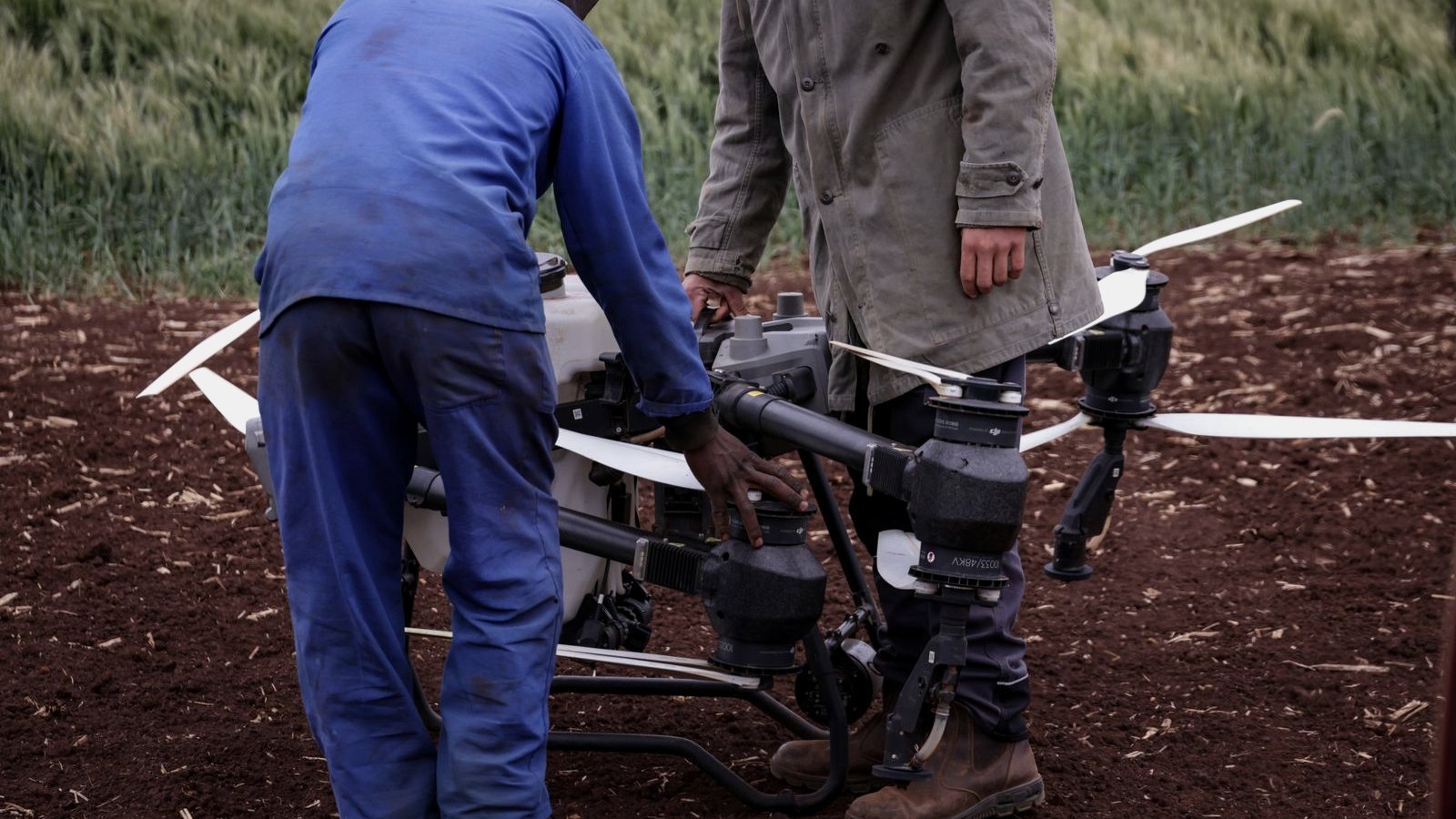
Image credit: Photo: Two farmers working with a drone for crop surveillance in a field — Magda Ehlers, Pexels License (Pexels)
Iris Van Loon covers SME operational reality and advisors for Flint Brief.
Spotted an error or want a right of reply? hello@flintbrief.com (subject [Right of reply]).