Brief № 045 · Strategy
AI energy now needs a meter, not a slogan
The EU is moving AI energy measurement from sustainability claim to procurement evidence. SMEs should ask vendors for usable numbers.
On this page
AI energy is leaving the footnotes and entering the buying file.
The European Commission’s 2026 consultation on measuring AI energy and emissions asked developers, deployers, suppliers and service firms how training and inference should be counted. That is a small procedural sentence with a large procurement consequence: a vendor’s answer to “is this efficient?” will soon need more than a green cloud badge.
The measurement gap is now official
The consultation ran from 7 April to 25 May 2026, with questionnaires accepted into June after an extension. Its target audience included start-ups, SMEs, large companies and organisations that develop or deploy general-purpose AI models or AI systems.
The useful part for smaller buyers is the Commission’s framing. It does not treat AI energy as a single cloud number. It asks for evidence across the lifecycle: computational resources, electricity consumption, hardware details, training and inference stages, and performance indicators. That is the shape of a supplier file, not a brand claim.
The AI Act already points in the same direction. The Commission’s consultation notes that providers of general-purpose AI models must document known or estimated energy consumption as part of the technical documentation obligations under Annex XI. An SME using a hosted model may not hold that duty directly, but it is still the buyer who pays the invoice, defends the sustainability claim and explains why a heavier model was selected.
Ask for the workload, not the average
Average data-centre efficiency is too blunt for AI procurement. A supplier can improve fleet-level performance while a specific workflow remains wasteful. Microsoft, for example, says its average water use effectiveness fell from 2.3 L/kWh in early designs to 0.27 L/kWh in 2025, and that new AI-optimised designs can use closed-loop cooling with zero water evaporation during operations. That is useful infrastructure context. It is not a workload answer.
For an SME, the first request should be narrower:
| Procurement question | Evidence to ask for |
|---|---|
| What is being measured? | Training, fine-tuning, inference, retrieval, storage or all of them. |
| What is the unit? | Per 1,000 calls, per document processed, per user/month or per batch job. |
| Where does it run? | Cloud region, model provider, accelerator class and fallback region. |
| How often is it reviewed? | Monthly, quarterly, release-by-release or only on request. |
| What changed the number? | Model switch, prompt length, retrieval size, batch size or caching. |
Source: European Commission AI energy consultation, AI Act Annex XI framing, OECD AI footprint report and Microsoft datacentre water-efficiency note. Last verified 2026-07-07.
The unit matters because AI costs rarely arrive alone. A support assistant may have a cheap subscription and a large inference trail. A document classifier may look efficient until every file is reprocessed after a prompt change. A sales copilot may push more energy into retrieval and logging than into the model call itself. The meter needs to sit where the work happens.
Sustainability claims need a narrow proof
The OECD’s AI footprint report makes the same distinction in policy language: direct environmental impacts come from developing, using and disposing of AI systems and equipment, while indirect effects come from the applications AI enables. That is why “AI reduces emissions” and “this AI workload consumes little energy” are different claims.
One claim may be strategic. The other is evidential. A warehouse optimiser could save fuel while using a heavier model than needed. A marketing generator could run on efficient infrastructure and still create no operational benefit. A customer-service classifier could reduce repeat handling, but only if the business measures the avoided work as well as the compute.
The procurement file should keep those claims separate. Put the workload energy estimate beside the business effect, not inside the same sentence. If the model saves staff time, show the baseline process. If it avoids truck rolls, show the avoided trips. If it only creates faster drafts, do not describe it as a decarbonisation project.
The energy file is a small addition
This does not require a new governance programme. It belongs in the same file SMEs are already building for AI Act readiness, cyber risk and supplier review.
Add five fields to the AI register:
- Workload unit: the repeatable thing being counted.
- Model and region: where the inference actually runs.
- Energy evidence: vendor figure, estimate method or “not provided”.
- Review trigger: model change, volume jump, new region or annual review.
- Decision owner: the person who can switch model, cache, batch or stop the workflow.
That last field matters. Energy measurement without authority becomes reporting theatre. Someone must be allowed to ask whether the task needs the largest model, whether documents can be batched overnight, whether cached answers are acceptable, or whether a smaller local model is good enough for the low-risk part of the workflow.
The next AI buyer will ask
The Commission’s energy consultation is not a finished label. The GPAI Code of Practice is not a purchasing checklist for every SME. The energy roadmap is broader than AI procurement. But together they show where the paperwork is moving: from general sustainability commitments toward specific numbers that can be compared.
The practical move is to start asking before the label arrives. Put one line in every AI request for proposal: provide the best available energy or emissions evidence for the proposed workload, including the unit measured, the region, the model family and the review date.
Some vendors will answer cleanly. Some will answer with corporate sustainability pages. Some will say the number is unavailable. All three answers are useful. They tell the buyer whether the supplier has a meter, a brochure or a gap.
Frequently asked questions
Does the AI Act make every SME measure model energy?
No. The clearest documentation duties sit with GPAI providers, but SME buyers still need vendor evidence when AI affects cost, resilience or sustainability claims.
What number should an SME ask for first?
Ask for electricity use or estimated energy per workload unit, the region where inference runs, and whether the figure covers training, inference or both.
Is a cloud sustainability badge enough?
No. It may help screen suppliers, but it does not replace workload-level evidence for a specific AI use case.
Sources
- Official Targeted consultation on measuring energy consumption and emissions of AI models and systems European Commission accessed
- Primary Regulation (EU) 2024/1689 laying down harmonised rules on artificial intelligence EUR-Lex accessed
- Official The General-Purpose AI Code of Practice European Commission accessed
- Official Strategic roadmap for digitalisation and artificial intelligence in the energy sector European Commission accessed
- Data Measuring the environmental impacts of artificial intelligence compute and applications OECD accessed
- Secondary Inside Microsoft's two-decade push to cut water intensity while scaling for growth Microsoft accessed
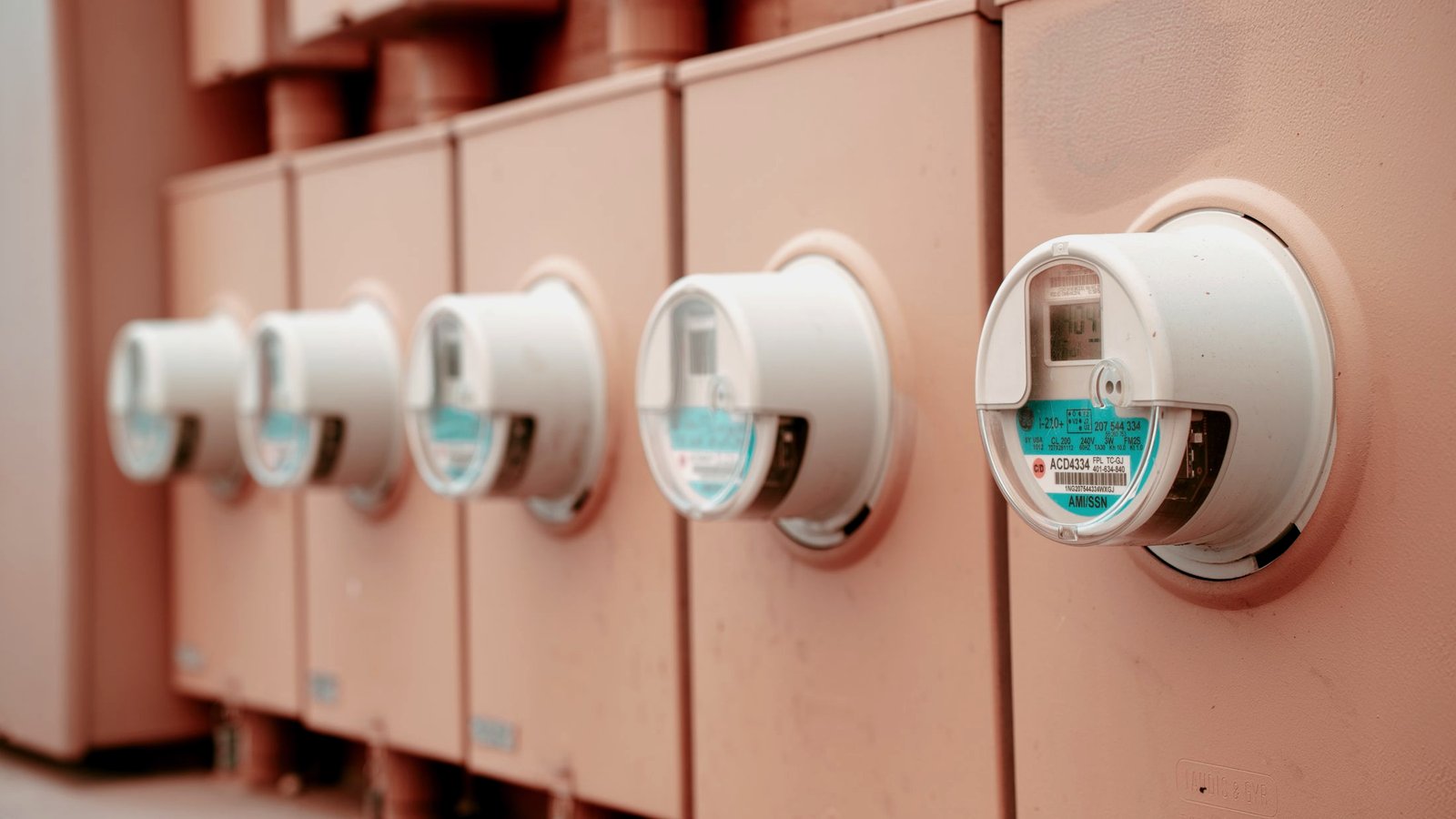
Image credit: Photo: row of electricity meters - Connor Scott McManus, Pexels
Iris Van Loon covers SME operational reality and advisors for Flint Brief.
Spotted an error or want a right of reply? hello@flintbrief.com (subject [Right of reply]).