Brief № 019 · Strategy
Digital Decade 2026: the AI gap is now operational
The EU's 2026 Digital Decade report shows AI adoption rising, but SMEs still need process, data and skills before tools become capacity.
On this page
Europe’s 2026 Digital Decade package makes the AI adoption debate less glamorous and more useful: the gap is no longer access to a model, but the ability to turn a model into repeatable work.
The Commission says Member States have committed 1,934 Digital Decade measures worth EUR 289.3 billion, including EUR 205.9 billion from public budgets. Eurostat’s enterprise survey shows the same story from the shop floor: AI use is moving, but unevenly. In 2025, 19.95% of EU enterprises with at least 10 employees used at least one AI technology. Small enterprises sat at 17%, medium enterprises at 30.36%, and large enterprises at 55.03%.
The average hides the work
An EU-wide adoption rate near one in five sounds like a threshold moment. For an SME, it is a weak planning number. It mixes a manufacturer testing visual inspection, a consultancy using text mining, a retailer generating product copy, and a large enterprise running several internal AI systems at once.
The size split is more useful. Large firms can absorb the boring work that sits around AI: data access, security review, process mapping, training, vendor management, incident handling and legal sign-off. A 30-person company often has the same conceptual problem, but one operations lead, one external IT provider and a spreadsheet that became infrastructure by accident.
That is why the Digital Decade package matters. It does not simply celebrate more tools in circulation. It frames digital transformation as infrastructure, skills, public services, business digitalisation and investment alignment. AI is part of that stack, not a detached purchase.
Tool adoption is the soft metric
Eurostat’s breakdown also shows why “we use AI” is not yet a mature KPI. In 2025, AI technologies performing analysis of written language were used by 11.75% of enterprises. Among enterprises already using AI, marketing or sales was the most common purpose at 34.70%, followed by business administration or management at 31.05%.
Those are plausible entry points. They are also easy places to confuse activity with capacity. A sales team can generate better first drafts without changing the CRM. An office manager can summarise documents without changing approval rules. A founder can ask a model for a policy without changing who owns the policy.
The stronger test is operational. Pick one process and ask four questions:
| Question | What it reveals | Failure mode |
|---|---|---|
| Is the source data accessible? | Whether the model can see the real work | Copy-paste automation that dies after the demo |
| Who owns the output? | Whether a human is accountable | Everyone uses it, no one reviews it |
| Where is the review step? | Whether errors are caught in time | AI output enters production by convenience |
| What evidence is retained? | Whether the process can be explained later | No audit trail, no learning loop |
Source: European Commission Digital Decade package and Eurostat enterprise AI statistics. Last verified 2026-06-18.
Public support will not remove the bottleneck
The Commission’s AI policy stack points in the right direction: AI Factories, supercomputing access, testing facilities, European Digital Innovation Hubs and coordinated implementation of the AI Act. These are useful because SMEs do not need only software; they need a cheaper path to expertise, compute, testing and interpretation.
But public infrastructure cannot decide which invoice process, service workflow or editorial control should change first inside a company. That decision remains local. The mistake is to treat every support scheme as a reason to widen the plan. For many SMEs, the better move is the opposite: narrow the first use case until ownership is obvious.
The AI Act reinforces that discipline. The Commission’s draft high-risk classification guidance is not legally binding, but it shows how quickly a vague AI idea can become a classification question when it touches employment, education, essential services, biometrics, health, safety or fundamental rights. Even an SME that is not building a high-risk system needs to know whether it is buying, deploying or merely using an AI feature inside a lower-risk process.
The 2026 SME checklist
The practical reading of the Digital Decade report is not “adopt AI faster”. It is “stop measuring AI separately from digital maturity”. A company with clean product data, stable access rights and a clear approval path can do more with a modest model than a company with scattered documents and no process owner can do with a premium platform.
Before the next procurement conversation, an SME should write a one-page process note. Name the workflow. Name the owner. List the inputs. Define what the AI system may produce. Define what a human must approve. Decide where the record lives. If that page cannot be written, the project is not ready for a larger budget.
That is a less exciting benchmark than adoption percentage. It is also the one that will decide whether the 2030 targets show up in ordinary European businesses, or only in dashboards.
Frequently asked questions
Does rising AI adoption mean SMEs are ready to scale?
No. The EU average reached 19.95% of enterprises in 2025, but small enterprises remained at 17%, far behind large enterprises at 55.03%.
What should an SME measure before buying another AI tool?
Measure whether the target process has accessible data, a named owner, a review step and a way to keep evidence of decisions.
Is this mainly a regulatory problem?
Not only. AI Act timing matters, but the Digital Decade gap is mostly about skills, infrastructure, investment discipline and operational follow-through.
Sources
- Official 2026 State of the Digital Decade package European Commission accessed
- Data Use of artificial intelligence in enterprises Eurostat accessed
- Official European approach to artificial intelligence European Commission accessed
- Official Guidelines for providers and deployers of AI high-risk systems European Commission accessed
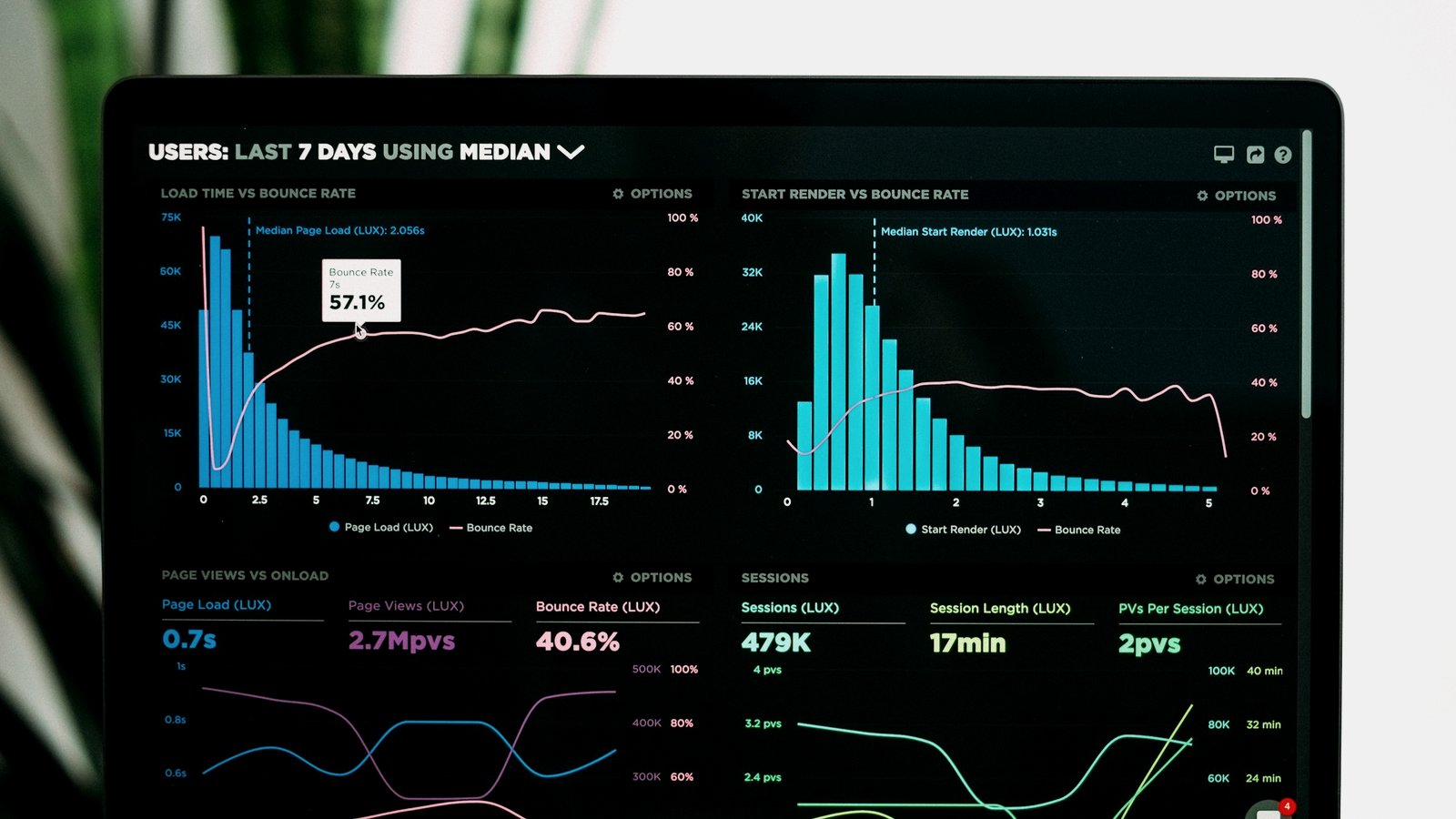
Image credit: Photo: performance analytics on a laptop screen - Speedcurve, Unsplash
Iris Van Loon covers SME operational reality and advisors for Flint Brief.
Spotted an error or want a right of reply? hello@flintbrief.com (subject [Right of reply]).