Brief № 021 · Market
EUROPA is a model promise, not an SME plan
The EU chose EUROPA to build a 24-language open frontier AI model. SMEs should treat it as a signal, not procurement certainty.
On this page
EUROPA is the most concrete European frontier-AI promise of the week, but for smaller firms it should be treated as a market signal before it is treated as a procurement plan.
On 19 June 2026, the Commission said it had selected EUROPA, a consortium led by the Italian company Domyn, as winner of the Frontier AI Grand Challenge. The ambition is specific enough to matter: an open-source AI model covering all 24 official EU languages, built to strengthen Europe’s capacity to develop advanced AI on its own infrastructure.
This is about capacity first
The announcement is easy to misread as another model launch. It is not that yet. It is a selection decision. The useful part is what the selection tells buyers about the direction of European AI policy.
The Frontier AI Grand Challenge was designed to push large-scale model development inside Europe. The applicant guidelines describe a target equivalent to at least 400 billion parameters, use of modular architectures such as mixture-of-experts, and access to EuroHPC supercomputing resources. The selected project is meant to produce an open model available to public authorities, scientific communities and businesses across Europe.
That makes EUROPA part of a larger industrial policy stack, not just a research badge. The Commission’s AI approach links model capacity to AI Factories, the AI Act Service Desk, skills work, data policy and Apply AI adoption measures. Europe is trying to join regulation, infrastructure and deployment into one story.
Whether that story works will depend on delivery. The announcement does not give SMEs a model endpoint, service-level agreement, benchmark card, hosting guide, licence pack or integration route. Those are the things buyers eventually need.
The language claim is the business claim
The 24-language promise is not decorative. It is the strongest commercial reason for a European open model to exist.
Many European SMEs do not operate in one clean language. They sell in Dutch and French, support customers in German, manage suppliers in Polish, process public documents in Spanish, and still write internal technology notes in English. The current default is often an English-first model that performs well enough until the work becomes local: legal wording, public procurement, customer tone, sector vocabulary, regional spelling, or a staff member who needs the output in a smaller market language.
An open model built from the start around all official EU languages could change the benchmark. Not because every SME will run it directly, but because providers, integrators and public-sector services may be able to build on a more inspectable multilingual base.
That is the possible upside. It remains a possible upside until the model ships and can be tested on ordinary European workflows.
SMEs should not wait for it
The wrong reaction is to pause every AI decision until EUROPA arrives. A selection decision is not a product roadmap for a 40-person company.
The better reaction is to stop locking workflows into one provider without a reason. If a company is already using AI for support, documentation, supplier review, search, coding, content labelling or internal knowledge work, it should know what would make that workflow portable.
| Portability question | What to record now | Why EUROPA makes it relevant |
|---|---|---|
| Language need | Which languages the workflow must handle well | A 24-language model may shift later options |
| Hosting need | Cloud, EU region, on-premise or managed service | Sovereignty claims turn into architecture choices |
| Evidence need | Inputs, outputs, reviewer and decision trail | Open does not remove audit requirements |
| Quality test | A small fixed test set from real work | Future models need comparable evaluation |
| Exit route | Prompt, data and integration dependencies | Model choice should be reversible |
Source: European Commission EUROPA announcement, Frontier AI Grand Challenge materials and AI policy pages. Last verified 2026-06-20.
This is not elaborate governance. It is procurement hygiene. A firm that can retest ten real tasks against a new model has options. A firm whose AI workflow lives inside a bundle, a chat history and one undocumented prompt has a dependency.
Open source still needs an operator
Open source is not the same as cheap deployment. If EUROPA delivers a capable open model, SMEs will still need someone to host, update, secure, tune, monitor and explain it. For most small firms, that operator will be a vendor, integrator, cloud provider, sector platform or public support channel, not an internal machine-learning team.
That is why the Commission’s surrounding infrastructure matters. AI Factories and EuroHPC resources can support model development. Apply AI can push sector adoption. The Service Desk can help with regulatory questions. Experience Centres and testing facilities can reduce the gap between policy and implementation.
But none of those instruments remove the basic buyer question: who runs the system when it breaks on a Tuesday morning?
The test for 2026
EUROPA’s selection is good news if it creates a credible European model option that buyers can inspect, test and build around. It is less useful if it remains a sovereignty headline while SMEs continue to depend on whatever model is bundled into their existing software.
The practical test for an SME is modest. Keep today’s AI workflows small enough to understand. Keep records of what they do. Keep test cases from real language work. Keep contracts and integrations loose enough that a better European option can be evaluated when it arrives.
That is the value of EUROPA before the model exists: it gives firms a reason to avoid treating the current provider market as final.
Frequently asked questions
Can SMEs buy or deploy EUROPA now?
No. The Commission has announced the selected consortium. It has not announced a generally available model that SMEs can procure today.
Why do the 24 official EU languages matter?
Language coverage matters because many European SMEs work across smaller markets where English-first AI tools can weaken support, compliance and customer work.
What should an SME do before the model exists?
Keep AI workflows portable: document data flows, prompts, outputs, evaluation tests, hosting needs and exit paths from current providers.
Sources
- Official Commission selects EUROPA consortium as the winner of the Frontier AI Grande Challenge European Commission, Shaping Europe's digital future accessed
- Official Turning strategy into action: Commission launches Frontier AI Grand Challenge European Commission, Shaping Europe's digital future accessed
- Official Guidelines for Applicants: Frontier AI Grand Challenge AI-BOOST accessed
- Official European approach to artificial intelligence European Commission, Shaping Europe's digital future accessed
- Official Apply AI Strategy European Commission, Shaping Europe's digital future accessed
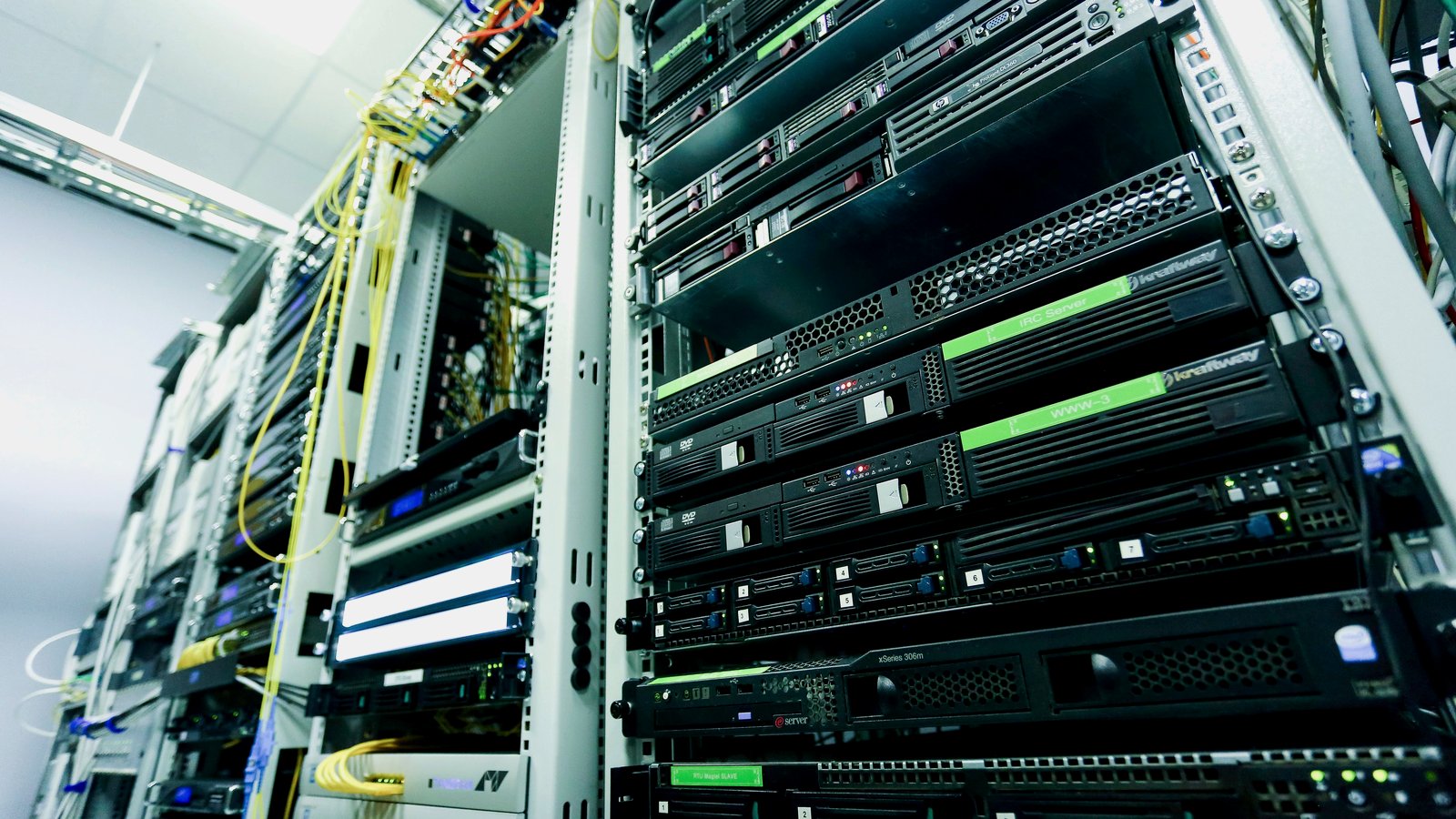
Image credit: Photo: high-tech server rack in a secure data center by Sergei Starostin, Pexels License (Pexels)
Marcus Heller covers the DACH market and strategy post-mortems for Flint Brief.
Spotted an error or want a right of reply? hello@flintbrief.com (subject [Right of reply]).