Brief № 016 · Cybersecurity
G7 cyber warning puts AI security on the SME agenda
The G7 cybersecurity declaration turns AI security into a supplier-evidence problem for SMEs buying or building AI systems in Europe.
On this page
The useful part of the G7’s latest cyber declaration is not the communique language. It is the way AI security has been placed next to post-quantum cryptography, telecoms resilience and SME protection as an infrastructure issue, not as a laboratory problem.
On 8 June 2026, ANSSI published the declaration issued after the G7 Cybersecurity Working Group’s 27 May plenary meeting. The European Commission welcomed it two days later, highlighting four priorities: post-quantum migration, cybersecurity risks from and to AI systems, telecoms cybersecurity, and support for SMEs. For a small European firm, the message is narrower and more practical: if an AI system enters the company, its security evidence enters procurement.
AI risk is now supply-chain risk
The declaration treats generative AI and large language models as double-edged security assets. They can help with vulnerability discovery, code generation and incident response. They can also be used by attackers, poisoned by bad inputs, exposed through data leakage or weakened by opaque dependencies.
That framing is different from the usual SME conversation about AI, which still tends to start with productivity. The cybersecurity question starts somewhere else: what components are inside the system, who maintains them, what data can they see, how fast can a vulnerability be acted on, and which supplier is responsible when the stack changes?
Most SMEs will not audit a foundation model. They may not even be able to see one directly. But they can ask for evidence at the layer they buy: the chatbot provider, the workflow vendor, the code assistant, the managed service provider, or the integrator wrapping a model into a sector tool. AI security becomes a chain of representations. The weaker the representations, the harder it is to trust the deployment.
The AI SBOM is a useful proxy
The most concrete artefact around the G7 work is the Software Bill of Materials for AI minimum-elements guidance. CISA describes it as recommendations to be considered alongside ordinary SBOM minimum elements because AI systems are still software systems. ANSSI’s accompanying publication says an AI SBOM improves transparency and traceability by mapping the AI supply chain, deployed components and dependencies.
For an SME buyer, that does not mean every vendor must hand over a perfect machine-readable AI SBOM tomorrow. The market is not there yet. It does mean the idea gives procurement a better checklist than “is your AI secure?”
| Evidence item | What it tells the buyer |
|---|---|
| Model identity and version | Whether a deployed system changed after testing or approval |
| Software dependencies | Which libraries, packages and services can introduce vulnerabilities |
| Data-processing boundary | What customer, employee or operational data can enter the system |
| Third-party components | Which external model, API, vector database or hosting layer matters |
| Update and patch process | How security fixes reach the live system |
| Vulnerability disclosure route | Where a researcher, customer or buyer reports a weakness |
| Incident notification | How the supplier will warn the SME if AI-related compromise occurs |
Source: G7 AI SBOM minimum-elements guidance, ANSSI AI SBOM publication and European Commission G7 cybersecurity summary. Last verified 2026-06-16.
The point is not paperwork for its own sake. It is response time. If a dependency is compromised, a hosted model is withdrawn, a connector leaks data, or a prompt-injection flaw affects a customer-facing workflow, the business needs to know which supplier can answer which question.
Secure by design is moving into contracts
The G7 declaration’s SME section echoes the EU Cyber Resilience Act: products should be secure by design, security should continue through the lifecycle, and small firms should get usable guidance rather than enterprise theatre. The Commission’s CRA implementation page says the rulebook covers digital-product security across design, updates and maintenance.
That matters because AI procurement often sits between software and service. A small company may buy a SaaS tool, connect it to a CRM, feed it support tickets, let it draft code, and then discover that nobody internally owns the security model. The vendor calls it a service. The business experiences it as infrastructure.
The contract should close that gap. A useful AI supplier clause does not need to be dramatic. It should say which components are under the supplier’s control, how security updates are handled, whether customer data is used for training or evaluation, whether logs can be exported for investigation, what subcontractors matter, and how soon the supplier will notify the customer of a relevant incident.
For AI systems that touch sensitive workflows, the same clause should ask for stronger evidence: security architecture notes, independent test summaries, model or service versioning, an AI SBOM where available, and a named channel for vulnerability disclosure.
Not every AI tool deserves the same file
The risk-based move for SMEs is to avoid both extremes. Ignoring AI security is too casual. Treating every office assistant as critical infrastructure is not credible either.
Start with four questions:
- Does the AI system see customer, employee, financial, source-code or regulated data?
- Can the system change an operational process, not just draft text for a person?
- Does the system connect to live business tools such as email, CRM, ERP, ticketing, repositories or identity systems?
- Would an outage, data leak or manipulated output create a material business or legal problem?
If the answer is mostly no, keep the record light: vendor name, purpose, data boundary, basic security statement, owner and review date. If the answer is yes, build a supplier-evidence file. The file should be short enough to maintain, but specific enough that a replacement manager could understand the risk in ten minutes.
AI-assisted code needs special treatment
The Commission’s G7 summary calls out AI-assisted vulnerability discovery and AI-assisted code generation as emerging cyber capabilities. That is where many SMEs will feel the issue first. A developer assistant can accelerate delivery, but it also touches repositories, secrets, dependency choices and insecure patterns.
The minimum control is not a ban. It is to decide where AI code assistance is allowed, where it is not, and what evidence remains after use. Teams should keep secrets out of prompts, review generated code like junior code, run dependency and static checks, and document whether the tool can train on submitted code. When a supplier or agency delivers software, the buyer should ask whether AI-generated code was used and which review process caught security-sensitive output.
That question is not moral. It is operational. If a vulnerability is later found in a generated function, the company needs a path to understand how it entered the codebase, whether similar patterns exist elsewhere and which supplier evidence applies.
The practical next step
The next step is a one-page AI security register, not a transformation programme. List the AI systems in use, the supplier, the workflow, the data exposed, the owner, the current evidence and the next missing answer.
Then pick the two highest-risk systems and ask their suppliers for the evidence that maps to the G7 direction: components, dependencies, security updates, vulnerability handling, incident notification and data boundaries. If the supplier cannot answer in full, record the gap and decide whether the system is still acceptable for the workflow it touches.
The G7 declaration does not give SMEs a new law to comply with this week. It gives them a clearer signal about where serious buyers are heading. AI security will be judged less by confident vendor language and more by traceable components, update paths and incident answers. That is manageable work, but only if it starts before the first breach or customer questionnaire.
Frequently asked questions
Does the G7 declaration create a new legal duty for SMEs?
No. The declaration is political and operational coordination between G7 cybersecurity agencies. The binding duties for European businesses still come from instruments such as NIS2, the Cyber Resilience Act, sector rules, contracts and data-protection law.
What should an SME ask an AI vendor for first?
Ask for a plain inventory of the model or service, major software and model dependencies, data-handling boundaries, security-update policy, vulnerability disclosure route and incident-notification process. For higher-risk systems, ask whether the supplier can provide an AI SBOM or equivalent evidence.
Is an AI SBOM the same as AI Act documentation?
No. An AI SBOM is a cybersecurity and supply-chain artefact that maps components, models, dependencies and provenance. AI Act documentation is broader regulatory evidence. They overlap, but neither replaces the other.
Which SMEs should prioritise this work?
Firms using AI in customer data flows, software development, security operations, critical supplier integrations, employment workflows, financial decisions or regulated services should move first. Ordinary office copilots still need governance, but usually not the same evidence depth.
Sources
- Official Declaration of the G7 cybersecurity working group - 27 May 2026 ANSSI accessed
- Official European Commission welcomes G7 cybersecurity declaration to strengthen global digital resilience European Commission accessed
- Official Software Bill of Materials for AI - Minimum Elements CISA accessed
- Official Cyber Resilience Act - Implementation European Commission accessed
- Official SMEs Cybersecurity ENISA accessed
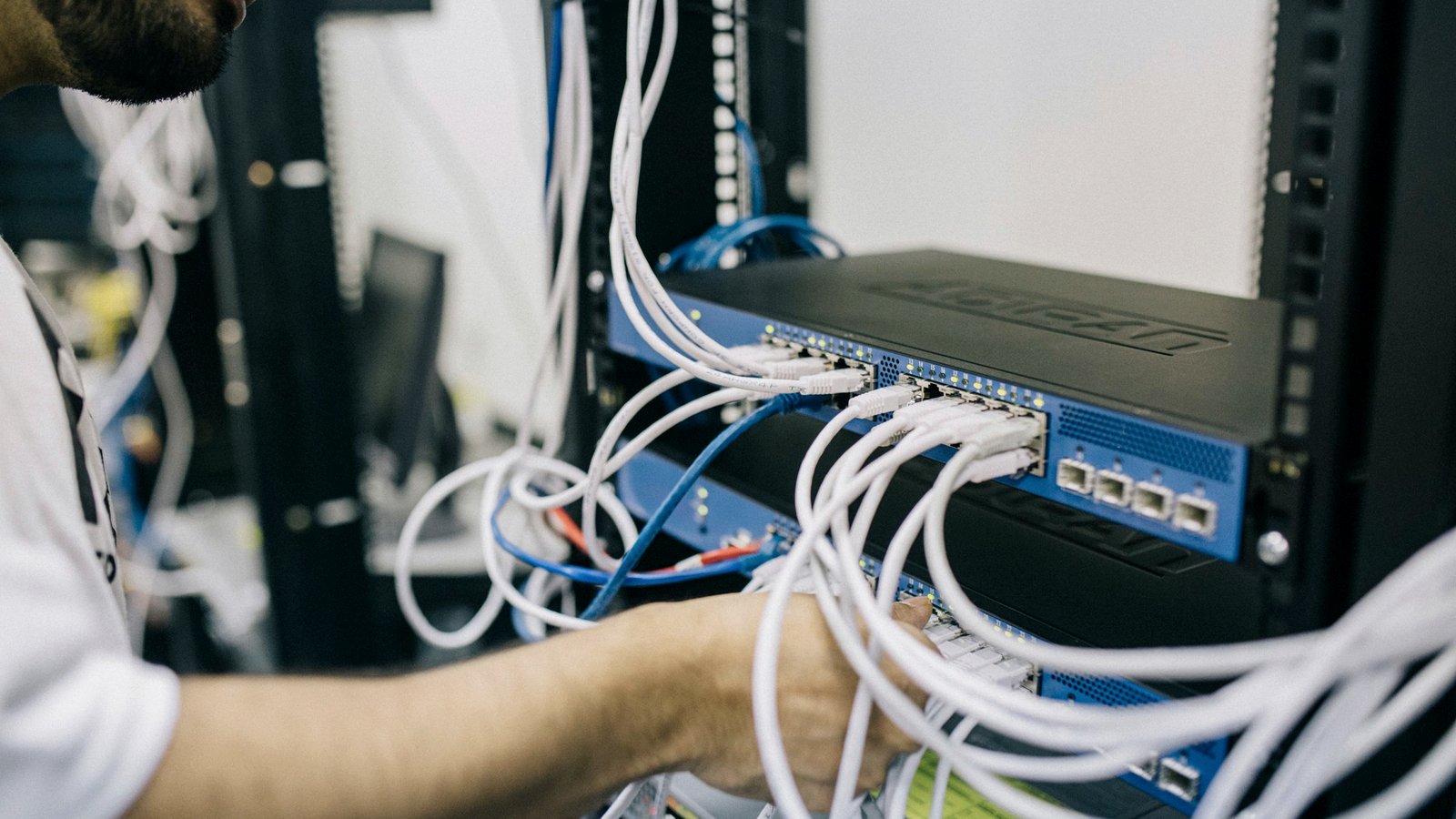
Image credit: Photo: Electronics engineer fixing server cables by Field Engineer, Pexels License (Pexels)
Iris Van Loon covers SME operational reality and advisors for Flint Brief.
Spotted an error or want a right of reply? hello@flintbrief.com (subject [Right of reply]).